
History of Shadowstar

Updated: May 22
The History of Shadowstar is a chronicle of survival, defined by an event that tore our realm from its home world and cast it adrift. We call that day the Cataclysm, which divided history into two eras: BC (Before Cataclysm) and AC (After Cataclysm).
A detailed chronology of these events can be found in The Chronology of Shadowstar.
Below is the story of a world that refused to be forgotten — told by one who was there to witness it all.
The Old Ages
During the Old Ages, when Shadowstar was still part of a greater world, Portjaw served as the beating heart of trade, where humans, elves, halflings, and dwarves came together in a rare harmony. The elves and halflings shared peaceful lives in the settlements of Forestlake and Eagleneck, while the dwarves built their own legacy far beneath the surface in Shadowgate, a subterranean city of legendary craftsmanship. The Gundarr Region flourished as a lush forest sanctuary, home to vast circles of druids and rangers who kept the ancient traditions of nature alive. The orcs, however, had no settlement to call their own, wandering the realm in scattered tribes, with no land to anchor them.
The Cataclysm
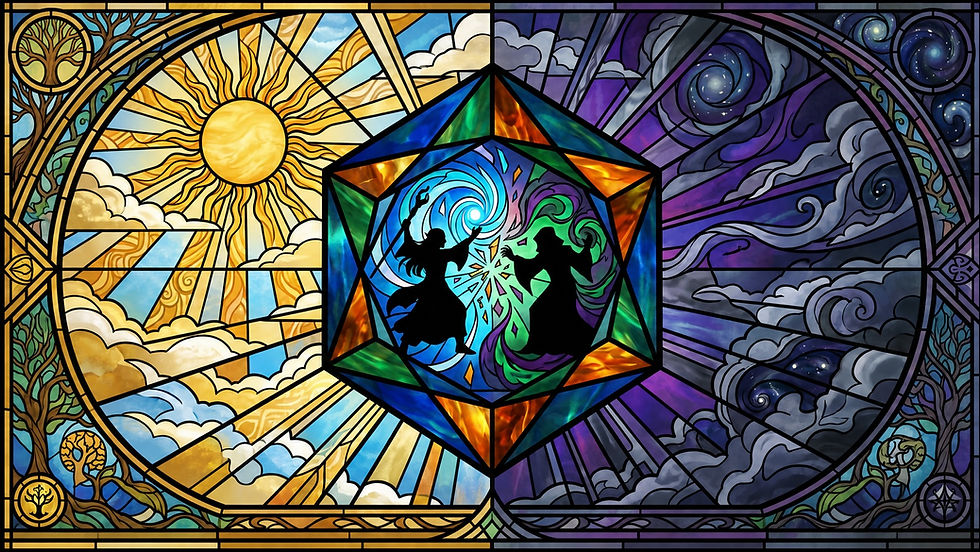
The defining moment of Shadowstar began with ambition and ended with betrayal. The elven mage Daegil and the necromancer Zargath joined forces to attempt a great ritual, one that promised passage between worlds. Yet Zargath had been seduced by the dark powers of a cursed realm, and at the height of the ritual, he turned against his partner. Unwilling to let Shadowstar be consumed by that darkness, Daegil made the ultimate sacrifice: he trapped both himself and Zargath within a gem, sealing the threat forever.
But the magic could not be undone. The arcane explosion that followed tore Shadowstar from its home world and hurled it into a distant corner of the multiverse. There it remains, encased in a shimmering magical shell that guards its inhabitants from the perils of the void to this day.
The Age of Ashes
The Age of Ashes was the first era following the Cataclysm, and perhaps the cruelest. The land bore deep scars, and its people struggled to survive amidst chaos and uncertainty. War, loss, and fear were the companions of every living soul in those years. I remember them well.
The Divine Silence: Old gods vanished, cutting off all divine magic and leaving religious orders powerless and without purpose.
The Gundarr Transformation: Gundarr forests collapsed into what we now know as the Gundarr Plains and Gundarr Swamp.
The Magical Shell: The arcane shell formed by Daegil's sacrifice preserved the realm's atmosphere and gravity, but the Weave remained unstable and unpredictable throughout the age.
The Shadow Mist: A lethal mist settled permanently over the heights of Mount Shadowstar, and has never lifted since.
The Magical Barrier: Explorers officially confirmed the total isolation of Shadowstar when they discovered a boiling wall of mist encircling the entire island.
The Cataclysm did not break us equally. Each of us found our own way to grieve and to survive.
Elven Retreat: Mourning our losses, we withdrew to Forestlake, seeking solace within what remained of the old world.
Halfling Resilience: The halflings of Portjaw started rebuilding Eagleneck, which had been devastated by Cataclysm-born tidal waves.
Restoration of Portjaw: Restoration of Portjaw began, a small but meaningful sign that hope had not been entirely extinguished.
Orc Migration: Orcs and ogres, taking advantage of the chaos, started to claim the newly formed Gundarr Plains for themselves. Growing bolder, they launched brutal assaults on dwarven hill settlements — the first sparks of a conflict that would burn for decades.
The Age of Wars
The Age of Wars marked a period of religious resurgence, racial conflicts, and political upheaval as newly manifested gods reshaped Shadowstar’s balance of power.
The Return of the Gods: Newly manifested deities granted power to mortals, finally ending the divine void left by the Cataclysm.
The Rise of Gundarakk: Empowered by their new god Clangeddin, the dwarves launched a devastating counterattack to reclaim the hills around Shadowgate, scattering the orcs into the wilderness. In response, the orcs rallied in the Gundarr Plains and began constructing Gundarakk, a grand city dedicated to Gruumsh.
The Corruption and Ruin of Portjaw: Cyric, the god of lies and strife, sank his claws into Portjaw. Human raiders led by Cyric fanatics attacked elven lands, sparking a decade-long conflict.
They came for our forests first. I was there when the fires started. Ten years of watching our ancient trees burn at the hands of men who had once traded peacefully beside us.
Cyric's gift to Shadowstar was not war — it was distrust that outlasted the war itself. Portjaw ultimately descended into a brutal civil war between Helm worshippers and Cyric fanatics, leaving the city in ruins. The defeated Cyricists fled to orc territory, leaving a Helm-influenced government to claim the wreckage.
Halfling Diplomacy: As the era drew to a close, halfling traders established the first major post-Cataclysm overland trade routes, restoring fractured commerce across the island.
The Age of Trade
The Age of Trade marked a shift from warfare to diplomacy and commerce, with halflings playing a key role in connecting the settlements. While tensions remained, trade flourished, reshaping the political and economic landscape.
The First Portjaw Treaty (201 AC): Signed directly between human and elven leaders, this foundational accord stabilized border tensions and forged the first true era of multi-racial diplomatic cooperation since the Cataclysm.
The Shadow of Zoltan: Not all dangers came from open warfare. A wizard named Zoltan had already begun moving quietly through the darkness, his true ambitions — and his true nature — still hidden from the world.
The Siege of Shadowgate: On the eve of the Second Portjaw Treaty, orc forces struck hard at Shadowgate. Human and elven armies fought side by side to break the siege — the alliance holding its first real test. But victory came at a cost. The half-elf ranger Reiker fell that day, ambushed by Cyricist fanatics.
I had known Reiker. The world became quieter the day he died.
The Second Portjaw Treaty (230 AC): This landmark agreement officially unified the independent nations of the elves, humans, and dwarves into a binding, grand military and political alliance designed to offer mutual defense against common existential threats.
The Age of Peace
Despite its name, the Age of Peace was less about true harmony and more about stability, hidden threats, and growing tensions. Trade flourished, new settlements emerged, and fortresses were built, but looming threats quietly took shape in the shadows. While civilizations expanded and diplomacy flourished, a dark power lurked beneath the surface. By the end of this age, Shadowstar suffered one of its greatest tragedies — the fall of Portjaw.
The Grand Construction Boom: Bound by the Second Portjaw Treaty, the allied races experienced a golden age of safety and structural development. Expansive new strongholds and naval ports were raised to secure trade routes and fortify borders against external threats.
The Rise of Cyrest: Deep within the isolated Hills of Vanechka, the exiled followers of Cyric consolidated their power. Under the guidance of the vampire wizard Zoltan, they founded Cyrest, a dark, highly fortified city-state that quietly built up an immense military force threatening the Alliance.
The Fall of Portjaw: Decades of fragile stability collapsed overnight. In a masterfully planned diversionary assault, Zoltan’s undead hordes attacked the dwarves of Shadowgate. While the Alliance scrambled forces to reinforce the dwarves, Zoltan’s main army, a horrifying advance force of fanatic cultists and orc legions, marched directly onto the Jaw Plains and completely overran Portjaw, bringing a violent end to the era.
I had watched Portjaw rise from ruins once before. Watching it fall again was heartbreaking.
The Age of Terror
The Age of Terror was a dark and oppressive era, dominated by the rule of Zoltan, the vampire wizard, and his undead army. Shadowstar was plunged into fear and suffering as undead horrors roamed the land, enforcing the will of Cyrest and Gundarakk. Portjaw fell completely under Zoltan’s control, and the island’s inhabitants lived in constant dread.
The Reign of the Vampire Tyrant: Following the fall of Portjaw, the vampire wizard Zoltan established an iron-fisted rule over the Jaw Plains. Portjaw was transformed from a bustling trade hub into a dark, gothic fortress-city ruled by fear, undead, and fanatic cultists of Cyric. For twenty-seven years Shadowstar suffered under Zoltan's shadow.
The Enslavement: The surviving civilian populations of the Jaw Plains were systematically enslaved. Zoltan drove massive forced-labor columns of prisoners of war to construct the vast fortifications of Cyrest deep within the Hills of Vanechka.
The Fall of the Tyrant: For nearly three decades, the remnants of the human, elven, and dwarven alliance launched desperate, localized guerrilla resistance campaigns. The era came to a dramatic and sudden conclusion when a legendary band of adventurers successfully infiltrated Portjaw, bypassed Zoltan's defenses, and finally destroyed the vampire wizard.
The Liberation: The destruction of Zoltan scattered the undead legions and fractured the command hierarchy of the Cyrest and Gundarakk armies. Seizing the moment, allied military forces launched a massive counteroffensive and successfully liberated Portjaw.
I had lived through the Cataclysm. I had lived through the Age of Ashes. But those twenty-seven years aged me more than all the centuries before them combined.
The Age of Hope
The Age of Hope was a time of rebuilding and religious shifts, as civilization recovered. Portjaw was restored, and the three great castles (Jawguard, Hatchet, and Reikerpass) formed a defensive confederation to protect the land from future threats. However, new dangers quietly emerged. The Talos cult gained power, establishing Castle Capefang as a stronghold, hinting at future storms to come.
The Three Castles Confederation: To ensure the dark forces of Cyrest and Gundarakk could never again overrun the Jaw Plains, a defensive alliance known as the Three Castles Confederation was established. This confederation consisted of three massive, strategically positioned fortifications protecting the region: Hatchet, Reikerpass, and the newly built Jawguard. With the liberation and restoration of Portjaw completed, the historic city was officially declared the capital of the newly formed Three Castles Confederation.
A city that had burned and bled and been rebuilt deserved that honor more than any other. Portjaw had earned its place at the heart of Shadowstar.
The Rise of Capefang: The peace remained fragile as a new threat emerged on the horizon. Fanatical worshippers of the storm god Talos constructed Castle Capefang along the rugged coasts of the Gundarr Plains.
A Shift in Faith: The trauma of the 27-year undead occupation deeply changed the religious life of the human populations. Helm lost significant favor among the populace, while Lathander, Mystra, and Azuth gained a surge of new followers and growing political power.
I have lived long enough to watch gods rise and fall. What surprised me was not that Helm lost favor — it was how quickly people found new gods to believe in.
The Age of Prosperity
The Age of Prosperity marks the current era of Shadowstar, an age defined by economic growth, political diplomacy, and new discoveries. The Three Castles Confederation, elves, dwarves, and halflings flourished, aided by advancements in farming and trade.
However, peace remains fragile. Capefang initially resisted diplomacy, and their pirates continue naval raids even after signing the Shadowgate Treaty. Meanwhile, dark cult activities increase, threatening the balance of power.
The Shadowgate Treaty: This historic accord officially established peace across the island between the Three Castles Confederation, Dwarves, Elves, Orcs, and Cyrest — binding all factions into an agreement to end open warfare.
The Inclusion of Capefang: After over a decade of resistance, the Talos-worshipping stronghold of Capefang finally signed the Shadowgate Treaty, bringing an uneasy peace to the realm.
Societal Advancements: The current era is marked by a level of prosperity never seen before for the Confederation, elves, dwarves, and halflings, fueled by major advancements in farming, herding, and trade.
The Rise of the Dark Cults: Peace remains incredibly fragile. Despite signing the treaty, Capefang's pirates continue to launch illegal naval raids against shipping lanes. Concurrently, mysterious figures have emerged in Death Beach, and dark cult activities have increased sharply across the island.
The Stone Rings: Fanatic followers of the dark deities Shar and Cyric attempted to activate the ancient, mysterious standing stone rings scattered across Shadowstar for a dark and unknown purpose, threatening to collapse the balance of power.
I have walked this world since before the Cataclysm tore it from its home. I have watched it burn and bleed and rebuild, more times than I care to count. And yet here we stand — older, scarred, but standing. Whether the shadows gathering at our borders mark the end of this age or merely another trial, I cannot say. I have learned not to make promises about the future. I only record what was, and what is. What comes next is yours to write.


